Licensed & insured
AL #06957
Mon–Sat 8am–5pm
Licensed & insured
AL #06957
Mon–Sat 8am–5pm
$400 installed, device included.
The power strip behind your television protects the television. It does nothing for the air handler, the range, the well pump, or the thing that actually costs money to replace.
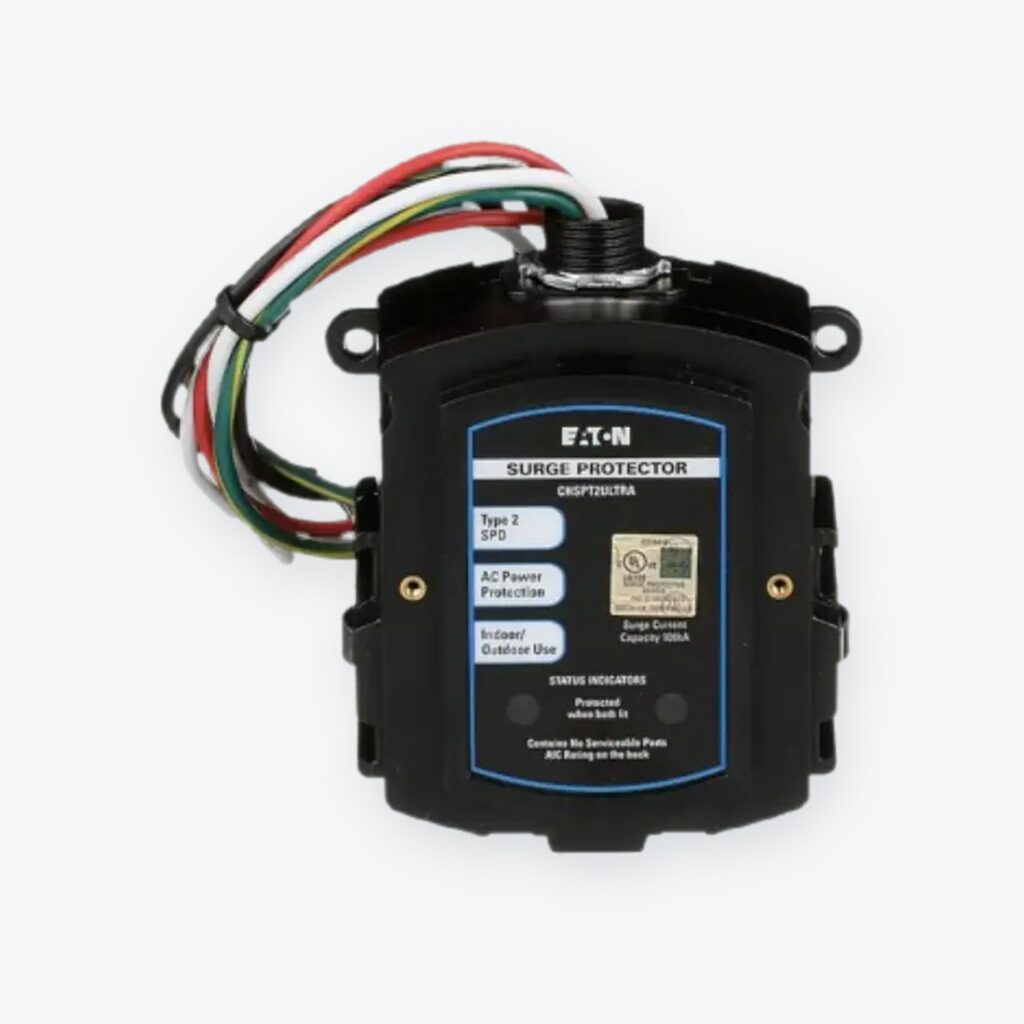
That’s less than one HVAC control board, which is the part that typically goes first.
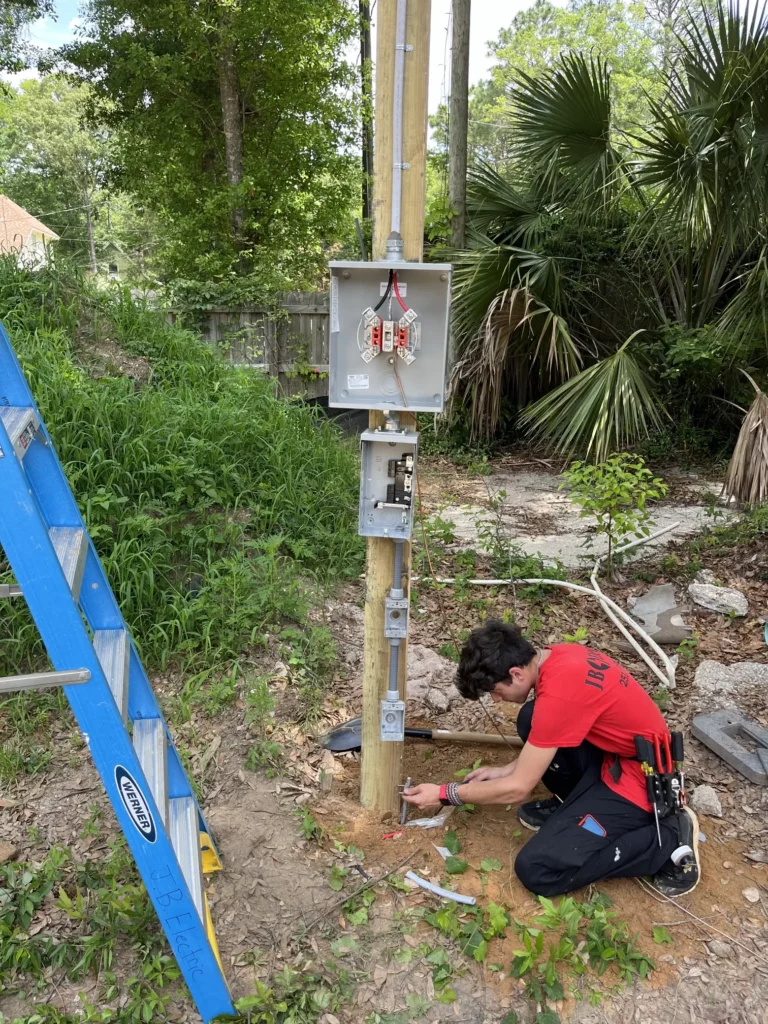
Most people picture a lightning strike on the house. That happens, and nothing survives a direct hit.
The surges that quietly destroy equipment on the Gulf Coast are smaller and far more frequent: utility switching after a storm, a transformer restoring power to the street, a neighborhood outage coming back online, and the large motors in your own house cycling. The air conditioner compressor is the biggest one.
Those events don’t kill a fridge outright. They degrade the electronics inside it over years.
A surge protective device mounted at the panel, which clamps everything entering the house through the service.
Point-of-use protection at sensitive electronics is still worth having as a second layer. The two work together; neither replaces the other.
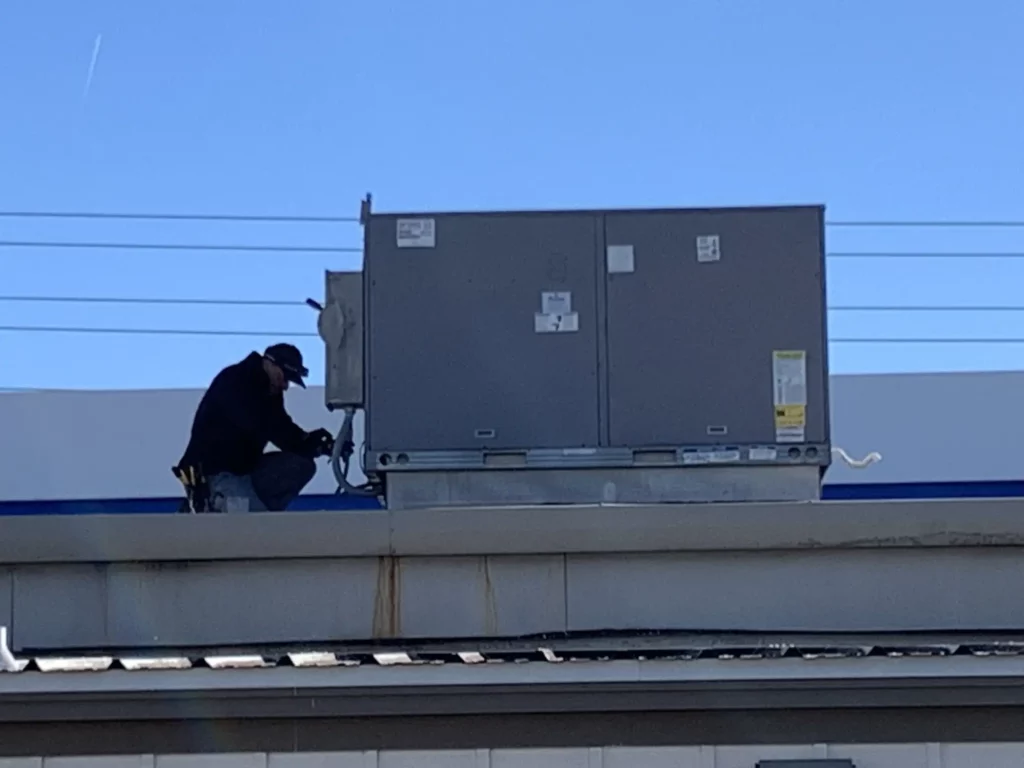
The worst time to think about this is while the power is coming back on. Restoration surges after a named storm take out a remarkable amount of equipment across Mobile County every season, and that damage frequently falls under a deductible.
Installing before the season starts costs a fraction of one HVAC control board.
Still not sure? Call (251) 550-9813, Monday to Saturday, 8 to 5.
No, it’s the layer above them. The panel device handles what comes in from the street and protects hard-wired equipment. Keep good point-of-use protection at the computer and the television.
No, and anyone who tells you otherwise is selling something. A direct strike is beyond what any device is rated for. What this handles is the far more common smaller surges that degrade equipment over time.
About an hour, with a brief power cut while we work in the panel. It mounts as a breaker-style device in the existing panel in most cases.
Yes. They absorb energy each time they clamp, and most have an indicator light showing protection status. Worth a glance once a season: if the light is out, it’s done its job and needs replacing.