Licensed & insured
AL #06957
Mon–Sat 8am–5pm
Licensed & insured
AL #06957
Mon–Sat 8am–5pm
Sized, permitted, commissioned.
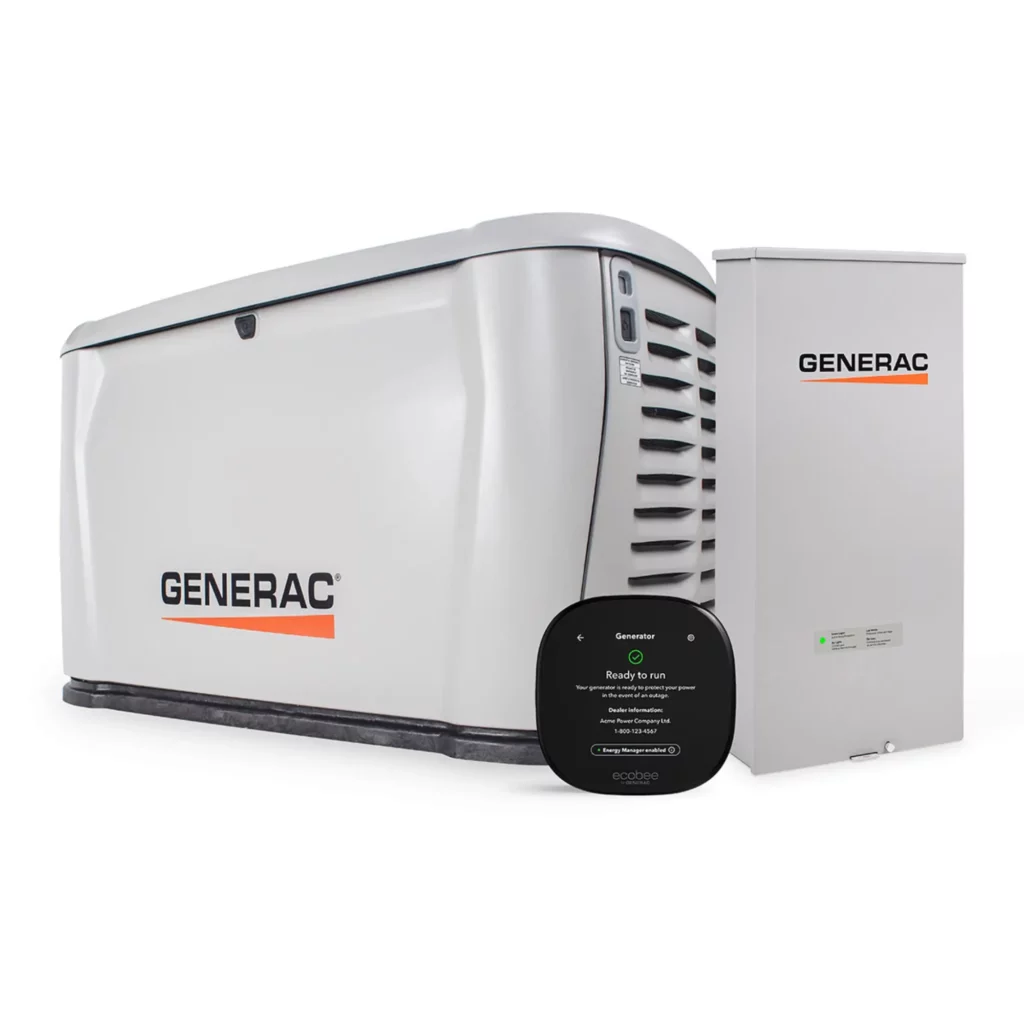
Done right, a whole home generator starts by itself while you’re asleep and you find out in the morning. Done wrong, it’s an expensive lawn ornament with a warranty nobody will honor.
The survey tells us the real number. It comes to you in writing before any work starts.
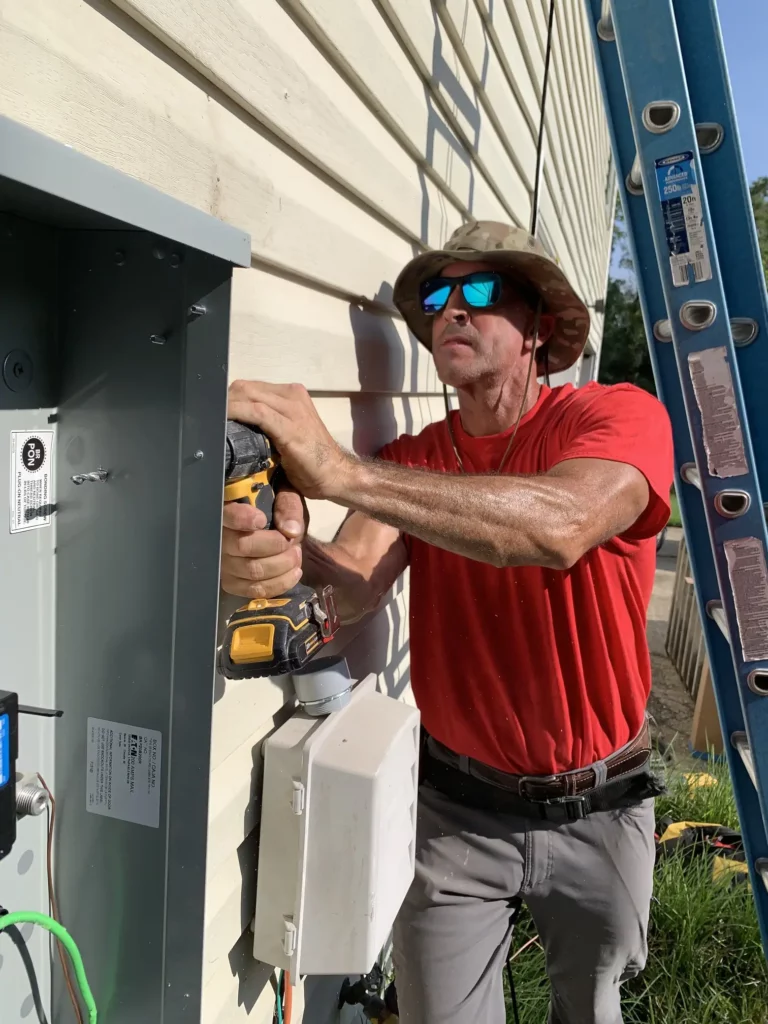
The most common mistake is buying the unit before anyone has done a load calculation. What you need depends on whether you want the whole house or a managed set of essential circuits.
In most Mobile County homes, a managed-circuit approach carries the air conditioning, the fridge, the well pump and the lights for far less money than whole-house coverage. We do the calculation before recommending a unit, and if a smaller generator does what you need, we’ll say so.
Where the unit can legally sit relative to windows, doors and the meter.
Electrical, and usually gas, depending on jurisdiction.
A proper composite or concrete base, not blocks.
Automatic, so the changeover happens without you. This is the part that keeps utility crews safe from back feed, and it’s non-negotiable.
Natural gas connection coordinated with Spire, or LP tank siting and sizing.
Commissioning, exercise schedule set, and we walk you through it.
If natural gas is at the street, that’s usually the answer: no tank, no refueling, and it keeps running through an extended outage.
Where gas isn’t available, propane works well, but the tank has to be sized for the runtime you want. A tank that runs a generator for eighteen hours isn’t much use in a four-day outage.
Manufacturer warranties generally require installation by a licensed electrician and documented commissioning. We handle the registration and give you the paperwork.
Units need an annual service and a weekly self-exercise cycle. If a generator sits untested for two years, it will not start when you need it.
Still not sure? Call (251) 550-9813, Monday to Saturday, 8 to 5.
It depends on a load calculation, not square footage. Most Mobile County homes are well served by a managed-circuit system covering HVAC, refrigeration, well pump and lighting. Whole-house coverage costs considerably more and often isn’t what people actually want once they see the difference.
From the go-ahead to running, typically four to eight weeks. The install itself is two to three days. Permit turnaround and utility gas coordination are the variable parts, and they get longer as hurricane season approaches.
You can, and plenty of people do. Two things matter: never plug a portable into a wall outlet to back feed the house (it can kill a lineman, and it has), and if you want it connected properly, you need a manual transfer switch, which we can install.
Yes, through Affirm, subject to their approval. Generators are the job most people finance. See our financing page for how it works.
No. We don’t take deposits on any job. You pay when it’s commissioned and running.
Yes, for the brands we’re familiar with. If it’s a unit we can’t get parts support for, we’ll tell you rather than take the job.