Licensed & insured
AL #06957
Mon–Sat 8am–5pm
Licensed & insured
AL #06957
Mon–Sat 8am–5pm
Recessed, bathroom, kitchen and exterior.
New recessed lighting in a dark living room or kitchen, proper light over a bathroom mirror, under-cabinet strips that make a kitchen usable. Lighting is the job people notice every day.
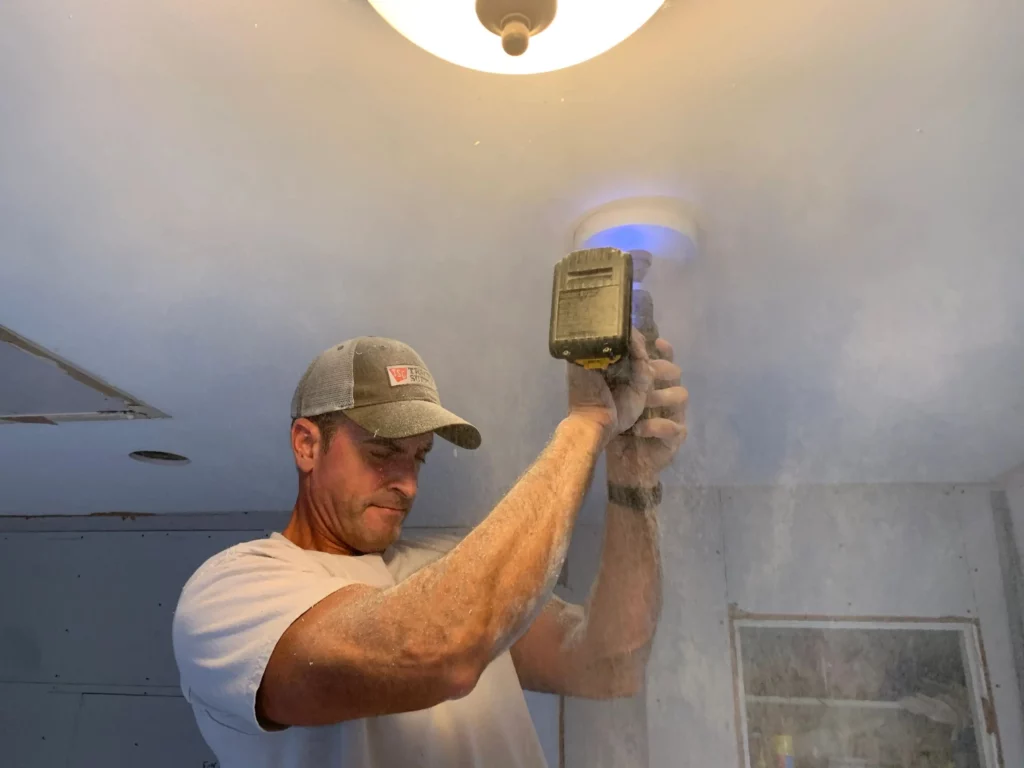
Larger jobs, like a full room of cans, a kitchen or a whole-house refit, are quoted flat after a walkthrough.
New cans, or retrofitting LED units into existing housings.
Over-mirror bars, sconces either side, damp-rated fixtures.
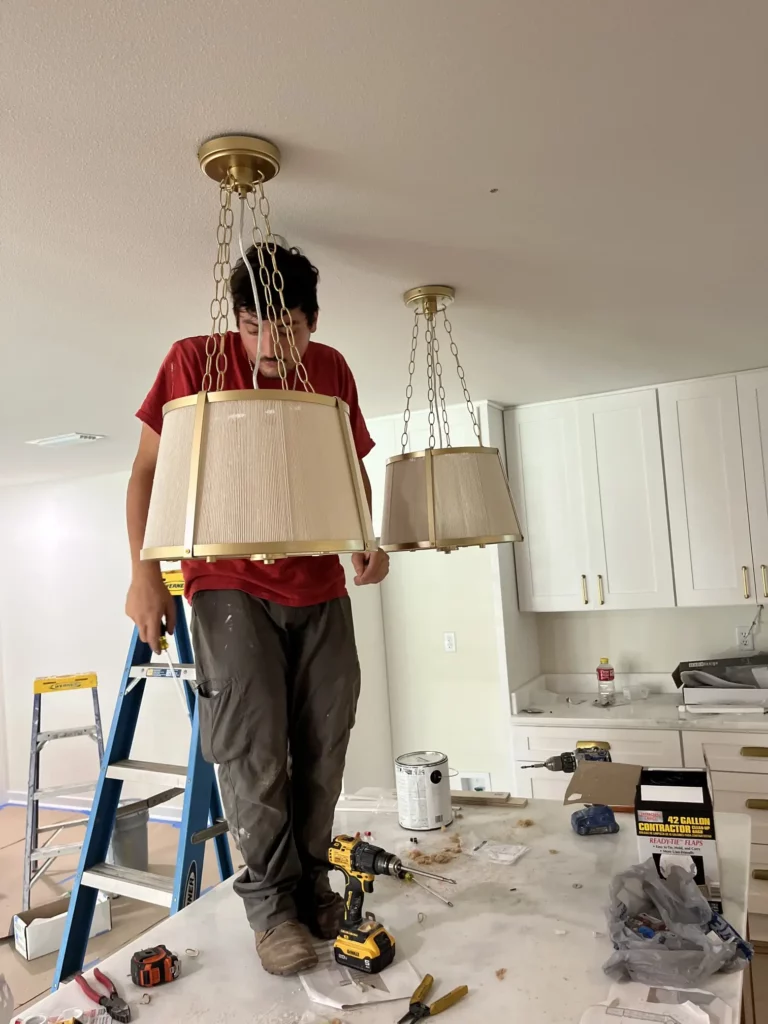
Under-cabinet strips, pendants over an island, replacing the old fluorescent box.
Straight swaps, or new points where there isn’t one.
Porch and soffit lights, motion-sensor floods, photocells.
Including sorting out the ones that buzz or flicker.
Replacing whatever is up there now with something that doesn’t need a ladder every year.
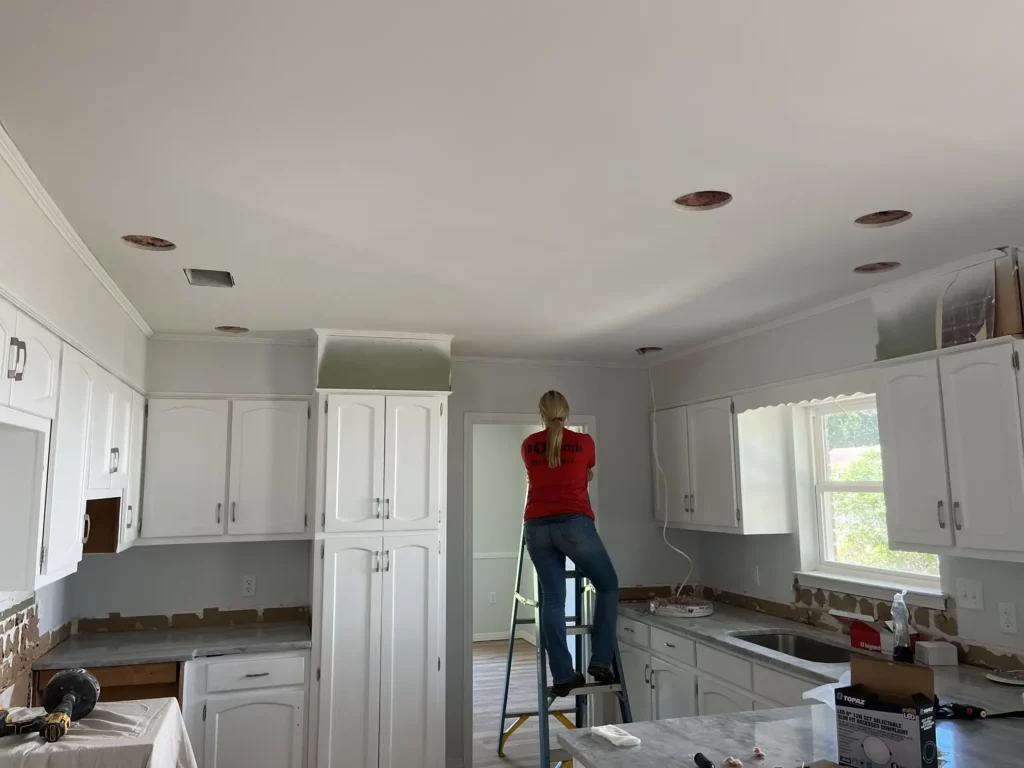
Two things go wrong with cans, and both are avoidable.
The wrong housing in an insulated ceiling. A fixture not rated for insulation contact needs a clearance gap, and when insulation gets packed against one anyway, which we find in attics all over the county, it runs hot. IC-rated housings cost a few dollars more per can, and they’re not optional in an insulated ceiling.
Spacing worked out on the ceiling instead of on paper. Cans put in wherever the joists happened to be leave scallops on the walls and dark patches in the middle of the room. We work out the layout before anything gets cut.
Buy your own and we’ll fit them, or tell us what you’re after and we’ll buy them and bill them through at cost.
No markup either way, the same way we handle ceiling fans.
Most LED flicker and buzz is a compatibility problem, not a faulty bulb. An old dimmer built for incandescent lamps won’t control a modern LED cleanly, and not every LED is dimmable. We match the dimmer to the fixture.
Smart switches mostly need a neutral wire in the box, and plenty of older Mobile County switch boxes don’t have one. Worth knowing before the box arrives.
Running a new light in a single-story house with an accessible attic is straightforward.
Doing the same on a ground-floor ceiling with a bedroom above it is a different job, because getting the cable there means opening something up. We’ll look before quoting, and tell you which one you’ve got.
Still not sure? Call (251) 550-9813, Monday to Saturday, 8 to 5.
It depends on the ceiling height and what the room is for, which is why we mark the layout on the ceiling before anything gets cut. A common starting point is spacing the cans about half the ceiling height apart, so roughly four feet on an eight-foot ceiling, and about half that distance in from the walls.
Usually, yes. Remodel-style housings go in through a hole cut in the finished ceiling and clip to the drywall. What decides the job is attic access above and whether there are joists, ducts or pipes in the way.
Nearly always a dimmer that wasn’t made for LEDs, or an LED that isn’t dimmable. It’s a cheap fix once it’s diagnosed, and it isn’t your wiring.
Either way. Buy your own and we’ll fit them, or we’ll buy what you want and bill it through at cost. Same as ceiling fans.
Usually. The cost is mostly about access rather than the fitting itself: an accessible attic above is easy, a ceiling with a room over it is not. We’ll look first.
Yes. If it’s vented properly it’s a straightforward swap. If the old one was never vented to outside, we’ll tell you, because that’s how you get damp in the attic.