Licensed & insured
AL #06957
Mon–Sat 8am–5pm
Licensed & insured
AL #06957
Mon–Sat 8am–5pm
Aluminum, knob-and-tube and two-prong.
Three different eras of wiring, three different problems, all still live in houses around here.
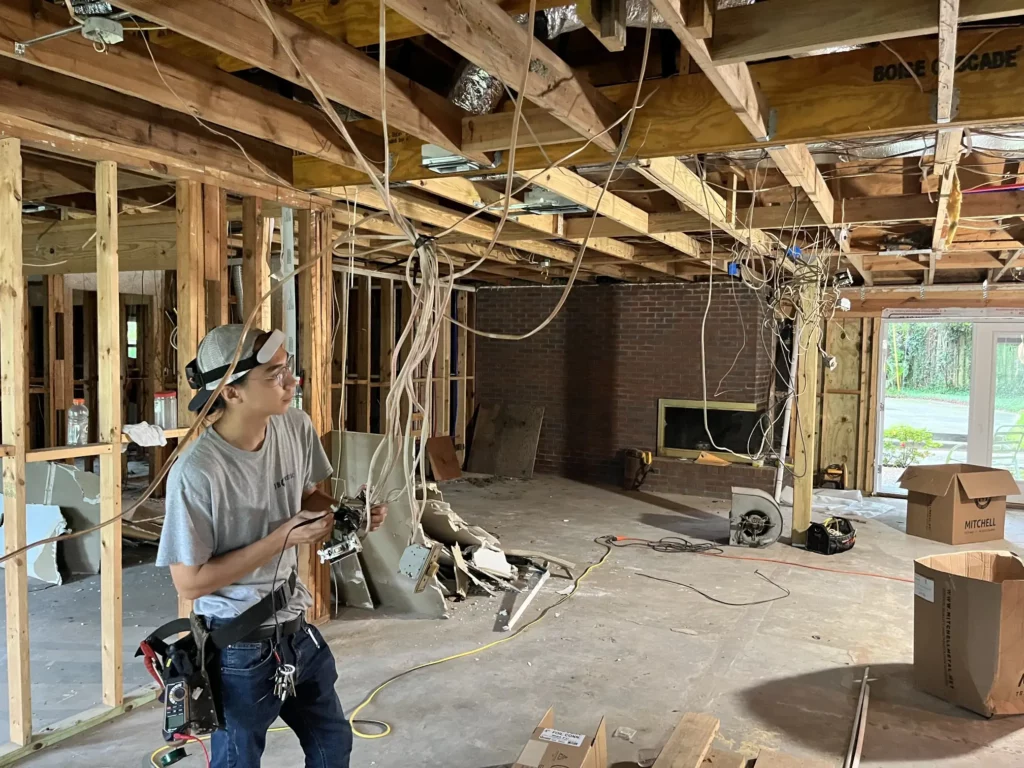
Permits are included in the quoted price either way, and we don’t take a deposit.
Used in houses built roughly 1965 to 1975, which covers a large share of West Mobile and Tillmans Corner. The wire itself isn’t the problem, the connections are. Aluminum expands, contracts and oxidizes differently from copper, so terminations loosen over decades and heat up. Warm switch plates, flickering and a faint hot-plastic smell are the classic signs.
There are two legitimate fixes: a full rewire in copper, or approved connectors at every device and junction. A wire nut and hope is worse than doing nothing, because it looks addressed.
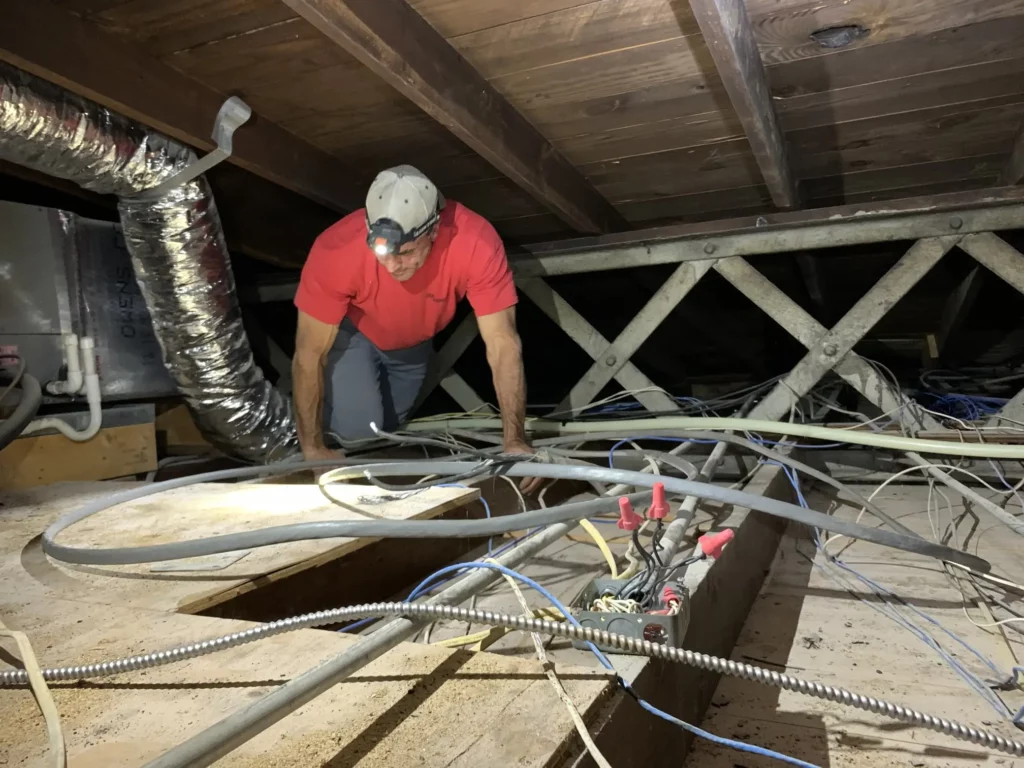
Pre-1950s, so mostly Midtown, Oakleigh and the older streets in Saraland. It’s ungrounded, the insulation is usually brittle, and it was never designed to be buried in modern attic insulation. Most of what we find has been spliced into by someone with more confidence than training. Insurers are increasingly firm about it.
Swapping in three-prong outlets with no ground behind them is both illegal and genuinely dangerous, because every surge protector you plug in afterwards does nothing. The correct answers are a rewire, a proper ground run, or GFCI protection with the required labeling. We’ll explain which applies room by room.
A whole-house rewire is disruptive and expensive, and plenty of houses don’t need one.
Often the kitchen, bathrooms and a couple of failing runs are the real problem while the rest is sound. We’d rather scope that accurately than sell you the biggest version of the job.
Still not sure? Call (251) 550-9813, Monday to Saturday, 8 to 5.
Honest answer: significantly. Access means opening walls and ceilings in places, and we work room by room to keep the house livable. We’ll walk you through exactly what gets opened before you commit. We don’t patch drywall, but we’ll tell you who does.
No. Without a ground behind it, a three-prong outlet gives you a place to plug in protected equipment that has no protection at all. It’s a code violation and it shows up on every home inspection. The legal alternative is GFCI protection with the correct labeling.
Not on its own. It’s a known condition with a known remediation cost. Get it scoped properly and it becomes a negotiating number rather than a reason to walk.
Yes. We pull the permit and meet the inspector. You get the paperwork, which matters when you sell.